
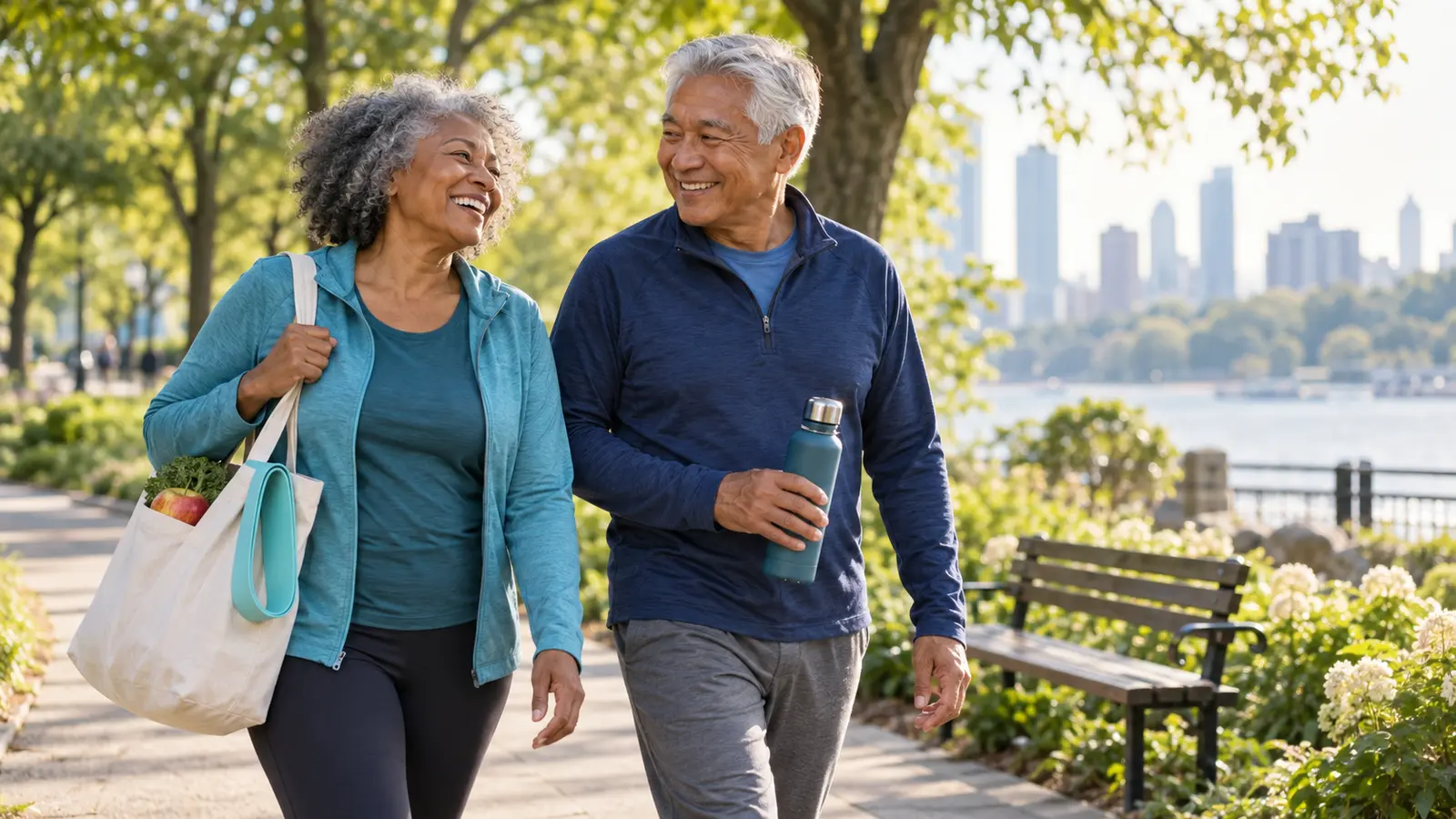
Healthy aging is not about finding a way to stop aging. It is about supporting function, independence, wellbeing and quality of life as the years pass. Genetics and health conditions matter, but everyday habits also shape the environment in which aging takes place.
Keep moving
Regular physical activity is one of the most practical foundations of healthy aging. A well-rounded routine can include aerobic activity, strength work, balance and mobility. The appropriate level depends on health, fitness and ability. Someone returning to exercise or managing a medical condition may need individualized guidance.
Protect strength
Muscle strength supports everyday tasks such as carrying groceries, climbing stairs and getting up from a chair. Strength training does not have to mean bodybuilding. Progressive resistance can take many forms, including weights, machines, resistance bands and body-weight movements.
Eat for overall nourishment
A varied eating pattern can support general health. Prioritize a broad mix of nutrient-dense foods while keeping the approach realistic and culturally appropriate. There is no single anti-aging food, and supplements should not be treated as a replacement for a balanced diet.
Prioritize sleep
Sleep needs and patterns can change over time, but sleep remains important. A regular schedule, a comfortable sleep environment and attention to persistent sleep difficulties can be useful. Ongoing sleep problems deserve professional evaluation rather than endless experimentation with wellness products.
Stay socially connected
Healthy aging includes more than physical health. Relationships, community participation and meaningful contact can contribute to quality of life. Make social connection an intentional part of the week, especially when work, retirement, relocation or other life changes alter existing routines.
Keep learning
Learning new skills, reading, creative activities and meaningful challenges can keep daily life engaging. The goal is not to “hack” the brain but to remain curious, involved and mentally active.
Reduce avoidable risk
Preventive care, medication review, vision and hearing care, fall-risk awareness and management of existing health conditions can all matter. These decisions belong in an evidence-based healthcare context, not in marketing promises.
Build resilience through routines
A useful routine is one you can continue when life is imperfect. Instead of trying to overhaul everything, choose one area—movement, meals, sleep, social connection or learning—and make the next step concrete.
A practical weekly framework
Schedule movement on several days; include strength work appropriate to your ability; plan simple nourishing meals; protect a consistent sleep window; contact someone you value; learn or practice something interesting; and review appointments or preventive needs.
Products marketed for healthy aging
Be especially careful with “anti-aging,” longevity or rejuvenation claims. Product-specific ingredients, evidence, safety, interactions and legal claims must be verified independently. No affiliate product should be framed as proven to slow aging unless that precise claim is supported and legally permissible.
Ready to explore?
Explore the ROOT GMBMY option only where compliant and only after current product identity, ingredients, label claims, safety information, availability, affiliate destination and disclosure have been verified.
Frequently asked questions
Can lifestyle habits guarantee healthy aging?
No. Aging and health are influenced by many factors. Habits can support general wellbeing but cannot guarantee outcomes.
Do I need supplements for healthy aging?
Not automatically. Supplement needs are individual, and products should be evaluated for evidence, safety and relevance.
Is it too late to start healthier habits?
People can often benefit from appropriate health-supporting behaviors at many stages of adulthood, but the safest approach depends on individual circumstances.