
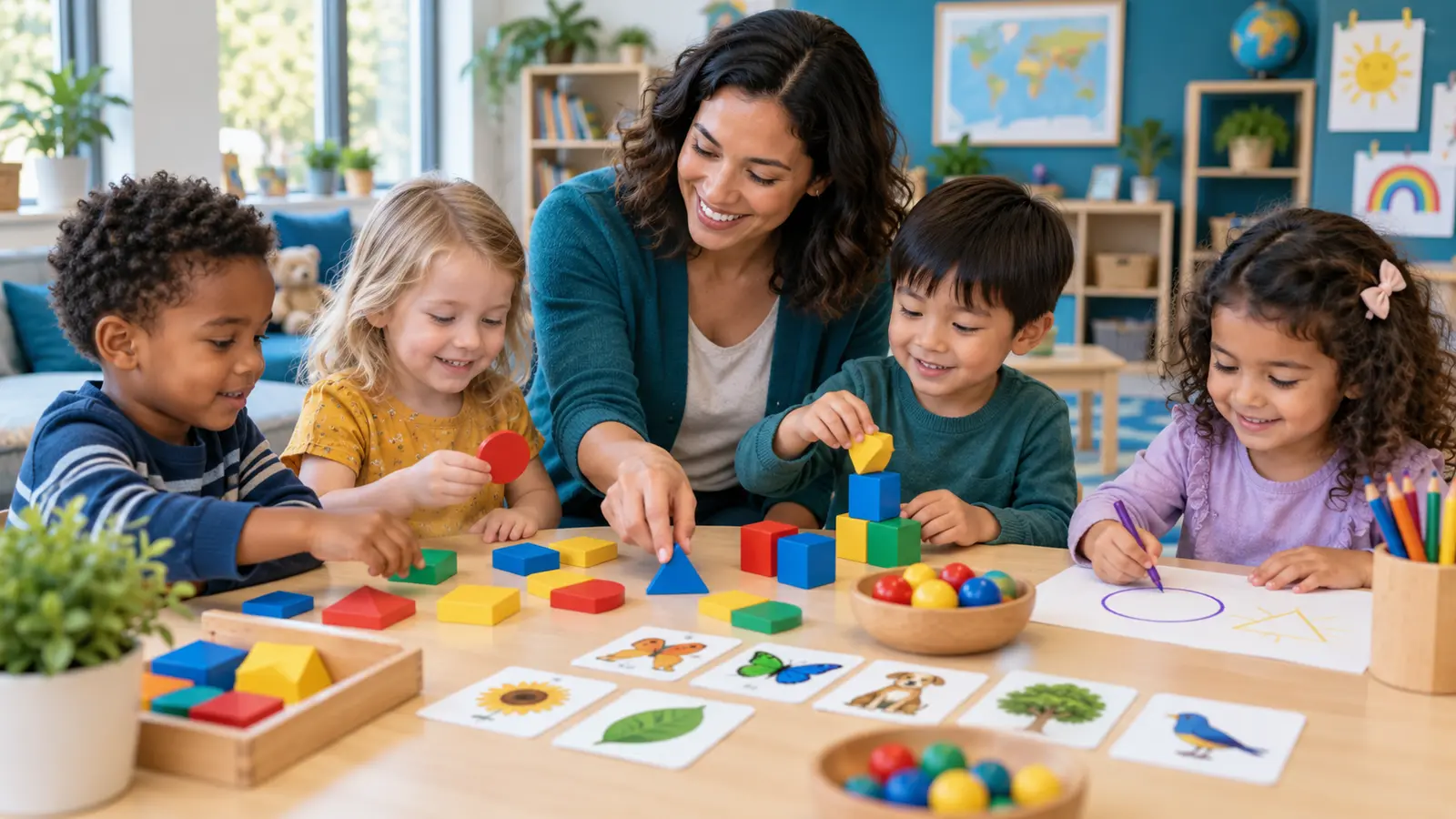
Hero image: beginner-s-guide-to-kindergarten-genius-what-to-know-before-you-start.webp
The kindergarten years are full of rapid development, but helping a young child learn does not require turning home into a formal classroom. At this age, play, conversation, stories, movement, creativity and everyday routines can all become opportunities to build language, early numeracy, curiosity, independence and social skills.
“Kindergarten Genius” should be approached as a practical learning resource rather than a promise that every child should reach the same milestones at the same time. Children develop at different rates, have different interests and may need different forms of support.
Start with connection and curiosity
Young children learn best when activities are understandable, engaging and connected to their world. Instead of beginning with long lessons, begin with questions: What is your child interested in? What can they already do independently? Which activities invite them to talk, count, notice, compare, build or imagine?
A child fascinated by animals can practice vocabulary through picture books, counting through toy animals, sorting through categories and drawing through observation. The learning objective can remain present without making the activity feel like a test.
Language through everyday conversation
Conversation is one of the simplest learning activities available. Ask open questions during meals, walks and play. Encourage children to describe what happened, predict what might happen next or explain how they built something.
Read aloud regularly and talk about the story. Ask about characters, sequence and unfamiliar words. Let the child retell parts in their own way. The purpose is not perfect recall; it is engagement with language and meaning.
Early number sense
Counting worksheets are only one way to explore mathematics. Use objects children can touch and move. Count fruit, blocks, steps or buttons. Compare which group has more or fewer items. Sort objects by shape, size or another visible feature.
Simple board games can support counting, turn-taking and following rules. Cooking can introduce quantities and sequence. Everyday questions such as “We need four plates; how many do we have?” connect numbers to useful situations.
Fine-motor development
Drawing, cutting with age-appropriate scissors, building, threading and manipulating small objects can strengthen coordination needed for many later tasks. Avoid making handwriting the only measure of progress.
Provide different materials and allow experimentation. Activities should be safe and appropriate for the child’s developmental level, with adult supervision where small pieces or tools are involved.
Movement matters
Learning is not limited to sitting at a table. Running, balancing, throwing, dancing and playground activities support physical development and give children ways to explore space, rhythm and coordination.
You can combine movement with learning: find objects of a certain color on a walk, clap syllables, count jumps or follow multi-step movement instructions.
Creativity and pretend play
Pretend play allows children to experiment with roles, stories, negotiation and problem solving. A cardboard box can become a shop, spaceship or kitchen. Art materials can be used without requiring every project to produce a specific final result.
When adults control every step, the activity may become a craft exercise rather than creative exploration. Offer enough structure to make participation possible, then leave room for the child to make choices.
Build independence through routines
Daily routines can teach sequencing, responsibility and self-management. Children can help prepare simple items, put materials away, choose between appropriate options and follow visual or verbal routines.
Keep expectations realistic. Independence develops through repeated opportunities and support, not through pressure to perform tasks before a child is ready.
Short activities are often enough
A five- or ten-minute activity can be valuable. Stop before frustration becomes the main experience. Repetition is normal, and children often want to return to familiar games many times.
Rather than trying to cover every developmental area every day, create a varied environment across the week: reading, conversation, outdoor movement, construction, art, music, simple number play and free play.
Observe rather than constantly test
Parents naturally want to know whether a child is progressing. Informal observation can provide useful information: Does the child understand instructions? Can they communicate needs? Are they becoming more independent? What captures their attention? Where do they become frustrated?
Avoid comparing one child too closely with another. If you have persistent concerns about development, language, hearing, vision, movement or learning, discuss them with an appropriate pediatric or educational professional rather than relying on an online activity guide.
A simple weekly learning rhythm
You might use a flexible rhythm such as:
• Read together every day.
• Include regular outdoor or active play.
• Offer one simple counting or sorting activity several times a week.
• Keep drawing, building and creative materials accessible.
• Invite the child into age-appropriate household routines.
• Protect time for unstructured play.
The goal is not to maximize the number of activities. It is to create repeated, positive opportunities to explore and learn.
What to look for in a learning resource
Before using an ebook or activity collection, check whether its suggestions are age-appropriate, understandable and adaptable. Be cautious of claims that a particular set of activities will make a child unusually intelligent or guarantee academic success.
A useful resource should help caregivers generate ideas while respecting individual development and the importance of play, relationships and professional guidance when concerns arise.
Next step
Explore the Kindergarten Genius resource for additional activity ideas once its current catalogue description and destination have been verified for publication.
Frequently asked questions
Does a kindergarten child need formal lessons at home?
Not necessarily. Everyday conversation, reading, play, movement and routines can provide many learning opportunities. Requirements also vary by educational setting and child.
How long should a learning activity last?
There is no universal duration. Follow the child’s engagement and the nature of the activity. Short, positive sessions are often more useful than forcing an activity after interest has disappeared.
Should parents correct every mistake?
No. Some mistakes are part of exploration and learning. Offer support and modeling without turning every activity into continuous evaluation.
What if I am concerned about my child’s development?
An online guide cannot assess an individual child. Persistent concerns are best discussed with qualified pediatric, developmental or educational professionals who can consider the child’s full context.