
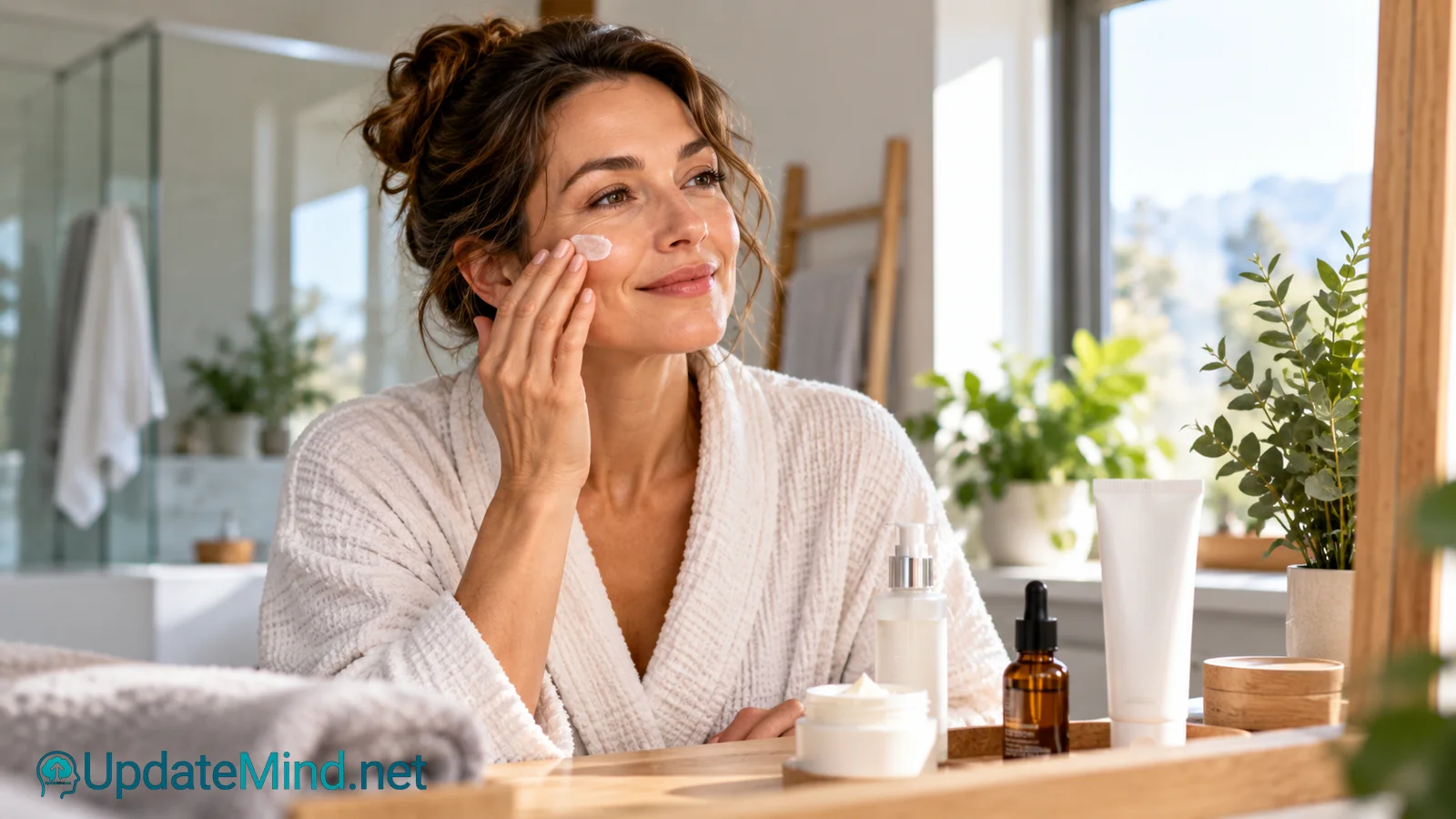
Skin changes with age, but skincare cannot stop time or promise a fixed result. A good routine can support comfort, protect the skin barrier, reduce avoidable sun damage and make the skin look more even and hydrated. The most useful routine is usually the one you can follow consistently and adjust when your skin gives you new information.
What healthy-aging skincare can realistically do
Healthy-aging skincare is mainly about protection, hydration and sensible expectations. Daily sun protection helps reduce exposure that contributes to premature skin aging. A moisturizer can make dry skin feel more comfortable and can temporarily soften the look of fine lines by improving the skin’s surface hydration. Some ingredients may improve the appearance of uneven tone or fine lines over time, but results vary and they do not replace medical care.
Cosmetic products also have limits. A product label may describe an appearance benefit, while a treatment claim can imply that a product changes a disease or a biological process. Read claims carefully and avoid assuming that an impressive promise has been proven for every person or every formula.
Build the routine in the right order
Start with a small routine before adding targeted products.
- Cleanse gently. Use lukewarm water and a mild cleanser when you need to remove sunscreen, makeup, sweat or dirt. Scrubbing harder does not make skin healthier and can increase irritation.
- Moisturize. Choose a moisturizer that feels comfortable and suits your skin. If your skin is dry or easily irritated, a fragrance-free formula may be easier to tolerate. Apply it after cleansing while the skin is still slightly damp.
- Protect during the day. Use a broad-spectrum sunscreen with SPF 30 or higher on exposed skin. Reapply according to the product directions, especially after swimming, sweating or extended time outdoors. Hats, shade and protective clothing add another layer of protection.
- Add one targeted product only if you have a clear reason. Changing several products at once makes it difficult to tell what is helping or causing a reaction. Introduce one new product, follow its directions and give your skin time to adjust.
Where retinol and retinoids fit
Retinol is an over-the-counter vitamin A ingredient used in cosmetic products. Retinoids are a broader group that includes prescription medicines and other vitamin A derivatives. They may help improve the appearance of fine lines, uneven texture or blemishes, but they can also cause dryness, peeling or irritation.
If you choose a retinol product, start slowly and use it as directed. Do not combine several strong active ingredients at the beginning. If your skin becomes persistently painful, swollen, cracked or intensely irritated, stop the product and seek qualified advice. A dermatologist can help decide whether a prescription retinoid or another option fits your skin and health history.
Match the routine to the concern
For dryness or rough texture, focus first on a gentle cleanser, a regular moisturizer and protection from the sun. Adding more exfoliating products can make the problem worse if the skin barrier is already irritated.
For uneven tone or dark spots, daily sun protection is the foundation. New or changing spots deserve professional assessment, particularly if they bleed, hurt, grow or do not heal. A clinician can distinguish an ordinary cosmetic concern from a skin condition that needs attention.
For fine lines, sunscreen and moisturizer are the practical starting points. Retinol or a prescription retinoid may be worth discussing if you want a targeted option, but no topical product should be presented as a guaranteed way to erase wrinkles.
For redness, stinging or sensitivity, simplify the routine. Pause recently added products, avoid harsh scrubs and consider fragrance-free options. Ongoing or worsening symptoms are a reason to ask a dermatologist for help.
Common mistakes that make routines harder
The most common mistake is treating skincare as a race to use more products. Strong exfoliants, multiple retinoids and heavily fragranced products can create irritation that looks like the original problem. Another mistake is changing everything at once, which makes it impossible to identify the cause of a reaction.
Be cautious with before-and-after images and claims such as “instant,” “miracle” or “permanent.” Look for clear information about the ingredient, intended use and limits of the product. A higher price does not automatically mean a better result.
Patch testing can reduce surprises, but it cannot guarantee that a product will never irritate you. Follow the product instructions and stop if you develop a significant reaction.
A simple morning and evening example
Morning:
- Cleanse gently if needed.
- Apply moisturizer if your skin needs it.
- Apply broad-spectrum SPF 30 or higher to exposed skin.
- Reapply as directed when you are outdoors.
Evening:
- Remove makeup and sunscreen gently.
- Apply moisturizer.
- If you use a retinol product, apply it according to its instructions and keep the rest of the routine simple.
This example is a starting point, not a prescription. Climate, skin type, allergies, medicines and existing conditions can change what is appropriate.
When to get professional advice
Seek medical advice for a new or changing skin mark, a spot that bleeds or does not heal, a persistent rash, painful swelling or a reaction that does not settle after stopping a product. A dermatologist can also help when several products have failed, when you are unsure whether a claim applies to your situation or when you want to consider prescription treatment.
Frequently asked questions
Can skincare reverse aging?
No. Skincare can support the skin’s condition and improve the appearance of some concerns, but it cannot reverse aging or guarantee a particular result.
Is an expensive routine better?
Not necessarily. A short routine with a gentle cleanser, moisturizer and reliable sun protection may be more useful than a complex routine that is difficult to follow or causes irritation.
How long should I try a product?
It depends on the product and the concern. Follow the label directions, change one thing at a time and stop sooner if you develop significant irritation. If you are unsure, ask a pharmacist, clinician or dermatologist.
Should I use every popular active ingredient?
No. Choose an ingredient for a specific goal and introduce it carefully. More active ingredients increase complexity and can increase irritation without guaranteeing a better result.
A realistic routine is protective, simple and repeatable. Start with the basics, watch how your skin responds and get professional help when a concern falls outside ordinary cosmetic care.